
Paracetamol (Doliprane) and desloratadine (Aerius) follow distinct metabolic pathways and do not share any common pharmacological receptors. Their co-administration does not generate any drug interaction listed in official databases. The real risk does not lie in this combination, but in what surrounds it: hidden paracetamol duplicates in other specialties, a weakened hepatic background, or concurrent alcohol consumption.
Hepatic metabolism of paracetamol and desloratadine: two parallel circuits
Paracetamol is primarily metabolized by hepatic glucuronidation and sulfation. A minor fraction passes through the cytochrome CYP2E1, producing the toxic metabolite NAPQI, which is neutralized by glutathione as long as hepatic reserves remain sufficient.
Desloratadine follows a different path. Its metabolism involves the isoenzymes CYP3A4 and CYP2D6 to form 3-hydroxydesloratadine. These two molecules are not in direct enzymatic competition, which explains the absence of clinically significant pharmacokinetic interaction between them.
When evaluating the possibility of taking Aerius and Doliprane together, it is this metabolic independence that constitutes the pharmacological basis for compatibility. The Aerius leaflet also confirms that there are no known interactions with other medications.

Paracetamol overdose: the trap of combined specialties
The main danger is not the Aerius-Doliprane combination but the unintentional accumulation of paracetamol. Many cold, flu, or fever medications contain paracetamol without the patient being aware. Combining Doliprane with one of these specialties can lead to an overdose.
The hepatic toxicity of paracetamol occurs when glutathione reserves are depleted and NAPQI accumulates. This mechanism is dose-dependent, but the tolerance threshold decreases significantly in certain profiles.
Populations at increased risk of hepatic toxicity
- Patients with pre-existing hepatic insufficiency, even mild, or chronic alcohol consumption: hepatic glutathione is already partially consumed, lowering the toxic threshold of NAPQI.
- Polymedicated patients taking CYP2E1 inducers (chronic alcohol, isoniazid): the fraction of paracetamol converted to NAPQI increases proportionally.
- Malnourished individuals or those fasting for prolonged periods: glutathione reserves are diminished, making the liver more vulnerable even to doses considered therapeutic.
We recommend systematically checking the composition of each medication being taken before adding Doliprane. A simple check of the leaflet or a question to the pharmacist is enough to avoid a potentially serious duplicate.
Alcohol, desloratadine, and paracetamol: a triangle to monitor
The official Aerius leaflet explicitly mentions caution with alcohol. Cases of intolerance and alcohol poisoning have been reported post-marketing in patients taking desloratadine. Although desloratadine is classified among second-generation antihistamines (known to be less sedating), individual sensitivity varies.
On the paracetamol side, alcohol exacerbates the hepatic risk through two mechanisms: it induces CYP2E1 (increasing NAPQI production) and consumes hepatic glutathione. The combination of the three substances (alcohol, paracetamol, desloratadine) does not create a direct interaction between the two medications, but it accumulates two factors of hepatic fragility and a risk of increased drowsiness.
Avoiding any alcohol intake during the co-administration of paracetamol and desloratadine remains the most clinically relevant recommendation, much more than the question of compatibility between the two molecules themselves.
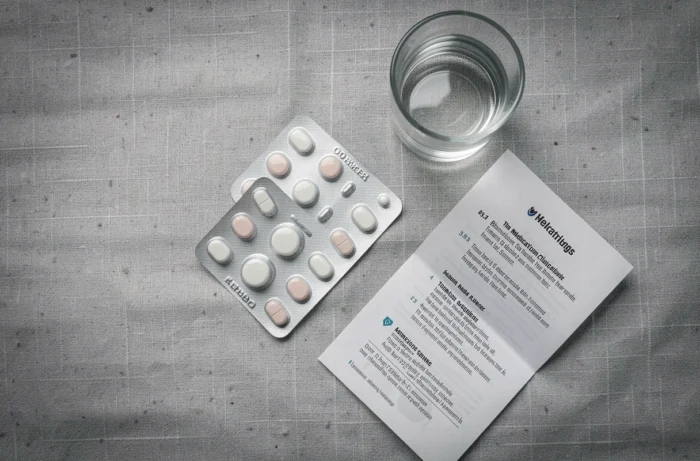
Dosing and administration window: practical points of vigilance
Aerius is taken as a single daily dose, regardless of meals. Its long half-life allows for stable antihistaminic coverage throughout the day. Doliprane, on the other hand, requires a minimum spacing between doses to avoid accumulation.
Spacing rules to follow
No specific delay between taking Aerius and Doliprane is required by the available pharmacological data. Both can be administered simultaneously or at different times of the day without altering their respective effectiveness.
However, the interval between two doses of paracetamol should never be less than four hours. This point is often overlooked when the patient is simultaneously managing allergic and painful symptoms, with a tendency to space Doliprane doses closer together to cover both types of discomfort.
When to seek medical or pharmaceutical advice
- Known or suspected hepatic insufficiency: the doctor can adjust the paracetamol dosage or suggest an alternative analgesic.
- Polymedication including specialties that already contain paracetamol (DolirhumePro, Actifed, Fervex, among others): the pharmacist identifies duplicates.
- Persistence of allergic symptoms despite desloratadine: a reevaluation of antihistaminic treatment may be necessary before adding other molecules.
- Pregnancy or breastfeeding: desloratadine passes into breast milk, and paracetamol, although widely used during pregnancy, requires medical advice in case of prolonged use.
Aerius without prescription and self-medication: what changes in practice
Desloratadine is available without a prescription in certain formulations, just like Doliprane. This accessibility facilitates self-medication, but it also exposes patients to a lack of pharmaceutical supervision. The pharmacist remains the most effective filter for detecting an individual contraindication that the patient may be unaware of.
A severe atopic background treated with long-term desloratadine deserves regular monitoring. The occasional addition of paracetamol does not pose a pharmacological problem, but it can mask a fever of infectious origin requiring specific management, particularly in immunocompromised or elderly patients.
The Aerius-Doliprane combination is pharmacologically safe. The reflex to adopt is not to look for an interaction between these two molecules, but to track down paracetamol duplicates in the medicine cabinet and exclude any concurrent alcohol intake. These two parameters concentrate almost all of the real risk.