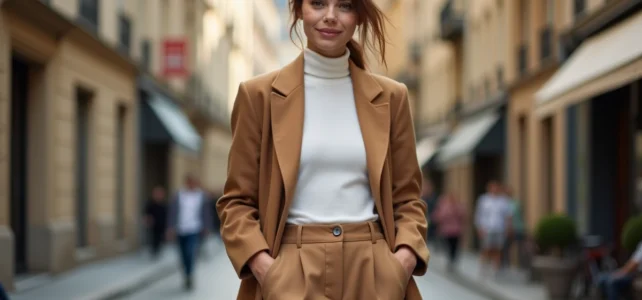
The 2026 season marks a clear shift in fashion towards desaturated materials and palettes. The runways have made a decision: color is no longer dominant in total looks but appears in strategic touches, and textile comfort becomes a style criterion in its own right.
Noble materials and texture play: the true stylistic pivot of 2026
Material now takes precedence over silhouette. A straight linen pant does not create the same effect as a straight polyester pant, even with the same cut and color. Recent collections emphasize textiles with a visible hand, those whose grain can be perceived by the eye.
Soft leather, brushed cotton, ribbed knit, and wool-cashmere blends form the foundation of the autumn wardrobe. The goal is no longer to layer pieces but to create a tactile contrast between two items: a matte leather jacket over a twisted knit sweater, a waxed cotton trench over a fluid crepe dress.
To delve deeper into this textural reading, fashion trends on The Living Web detail how to articulate these associations throughout the seasons.
This shift towards a more sensory fashion also changes purchasing criteria. Instead of accumulating trendy pieces at low cost, we recommend focusing the budget on two or three quality textiles that will last through multiple seasons.
Cloud Dancer palette and natural shades: decoding trendy colors
The pearlescent white Cloud Dancer is the Pantone color of the year 2026. It is not an optical white, but a warm, almost milky white that functions as a bright neutral. It pairs seamlessly with rejuvenating blue-greens and earthy accents that dominate the season.
The palette is structured around three families:
- Warm whites and beiges (Cloud Dancer, ecru, sand), which serve as the base for the majority of looks and replace black as the default color of the extended summer wardrobe
- Soft blue-greens (mint, sage, celadon), used as statement pieces like pants or blazers to introduce color without overwhelming the outfit
- Earthy accents (Sienna, chocolate brown, deep khaki), reserved for accessories or outerwear to visually anchor a light look
The technical point to remember: color is adopted in stages, not in total looks. Start with an accessory (bag, scarf, belt) in the target shade, then move up to a structuring piece. A mint green pant worn with a Cloud Dancer top creates a balance that the same shade in a full dress would not produce.
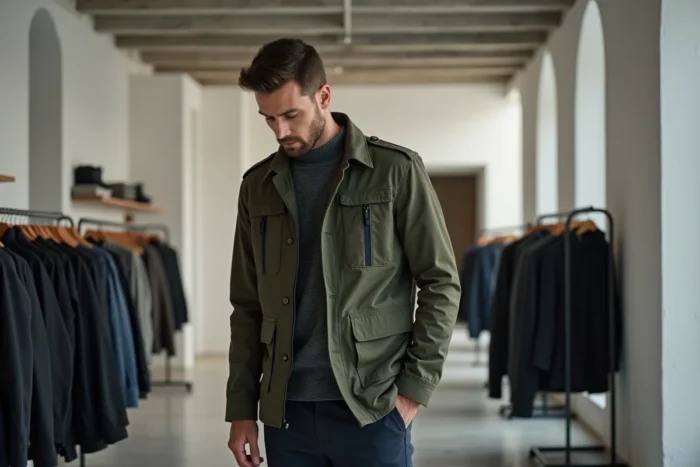
Green Glow, a gender-neutral color on the runways
The shade Green Glow appeared simultaneously in both men’s and women’s shows. This is a signal: trendy colors are no longer segmented by gender. A Green Glow blazer works in a men’s wardrobe just as well as in a women’s wardrobe, simplifying the interpretation of collections for buyers.
Adopting a fashion trend without revamping your wardrobe
We observe a recurring mistake: renewing an entire wardrobe each season. The effective adoption of a trend relies on a simple principle: modify one parameter at a time (color, material, or volume), never all three.
If your wardrobe is based on dark, fitted basics, the most natural lever is color. Replacing black jeans with sand beige pants is enough to anchor the 2026 palette into an existing outfit. If your basics are already light, focus instead on material: swapping a synthetic fabric blazer for one in linen or textured cotton changes the reading of the outfit without altering the silhouette.
The one-third rule for statement pieces
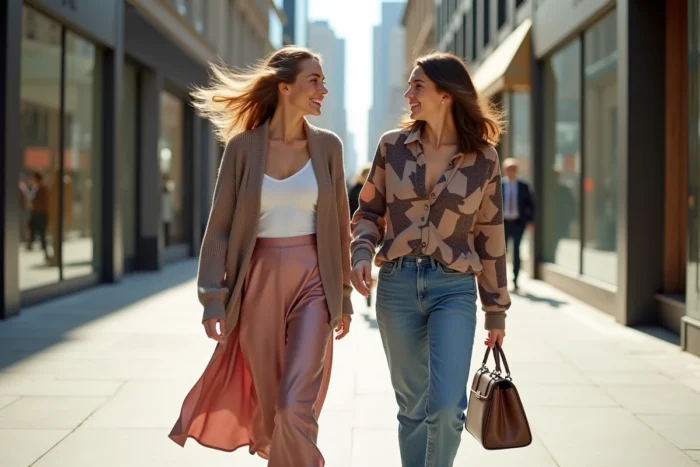
A statement piece (bright color, marked volume, bold pattern) should never represent more than one-third of the visible surface of the outfit. This ratio allows for the integration of an oversized coat or a patterned dress without tipping into costume territory. The rest of the outfit remains subdued in color and fitted in cut.
Accessories play a calibrating role here. A structured brown leather bag or a pair of closed-toe shoes in a neutral shade anchor a statement piece in reality. The neutral accessory balances the bold piece; it is a mechanism of visual balance rather than an aesthetic choice.
Leather, linen, knit: balancing autumn-winter style and comfort
Leather remains the signature material of autumn-winter, but its use is evolving. Matte finishes and soft leathers replace shiny or rigid leathers. A lamb leather jacket worn open over a cream ribbed knit produces exactly the textural contrast that the 2026 collections value.
Linen, long confined to summer, is establishing itself in mid-season wardrobes thanks to denser weights. A thick linen pant worn with ankle boots and a fine wool sweater creates a convincing autumn transition without sacrificing the natural drape of the textile.
Three criteria for deciding between two competing pieces:
- The touch: if the material catches or scratches after ten minutes of wear, it will not be worn daily, regardless of its visual appeal
- Seasonal versatility: a piece that can be worn in at least two seasons maximizes the investment and reduces dependence on micro-trends
- Compatibility with the existing wardrobe: a piece that pairs with fewer than three already rotating outfits will end up at the back of the closet
Fashion in 2026 rewards coherent wardrobes rather than accumulations. Investing in quality materials within a narrowed palette around warm neutrals and touches of blue-green remains the most sustainable strategy, well beyond this single season.