
Camel toe results from a mechanical interaction between a fabric, a cut, and a body. It is neither a morphological defect nor a clothing inevitability. Understanding the technical causes allows for choosing between three distinct postures: embracing the visible mark, temporarily hiding it, or correcting it in advance through clothing choices.
Pattern Making and Weight: The Technical Levers Brands Are Starting to Name
Articles addressing camel toe focus on consumer tips, such as changing underwear or pulling on the fabric. Leggings and sportswear manufacturers have adopted a different approach for a few seasons: they integrate camel toe prevention directly into the garment’s pattern.
Four design parameters determine whether a bottom will mark the crotch or not:
- The absence of a front seam eliminates the tension line that presses the fabric against the vulva. Some brands replace the central seam with a single panel that distributes the material.
- The diamond-shaped gusset, positioned slightly towards the back rather than centered, reduces pressure on the front area while maintaining ease of movement.
- A deeper front rise of a few centimeters gives the fabric enough room not to ride up under tension.
- A sufficiently dense weight prevents the fabric from conforming to anatomical contours. Very thin and highly elastic materials are the most likely to create a camel toe.
Product sheets from yoga specialty stores now mention the placement of the gusset as a performance criterion, alongside breathability and freedom of movement. The topic is gradually moving out of the realm of taboo into that of technical design criteria.
For those looking to manage camel toe in women, this evolution changes the game: the most sustainable solution does not involve a corrective accessory but rather a well-designed garment from the start.

Camel Toe and Underwear: Why Panty Liners Don’t Solve Anything
The most common reflex is to add a layer between the skin and the garment: folded panty liner, piece of toilet paper, or even a small silicone shell sold as “anti-camel toe.” These solutions share the same flaw.
They address the symptom without altering the mechanics. A panty liner moves during exertion, folds in on itself, and ultimately creates an irregular volume that can sometimes be more visible than the initial camel toe. Toilet paper disintegrates within a few hours. Silicone shells hold better, but they add a rigid thickness under a soft fabric, which can create an artificial outline.
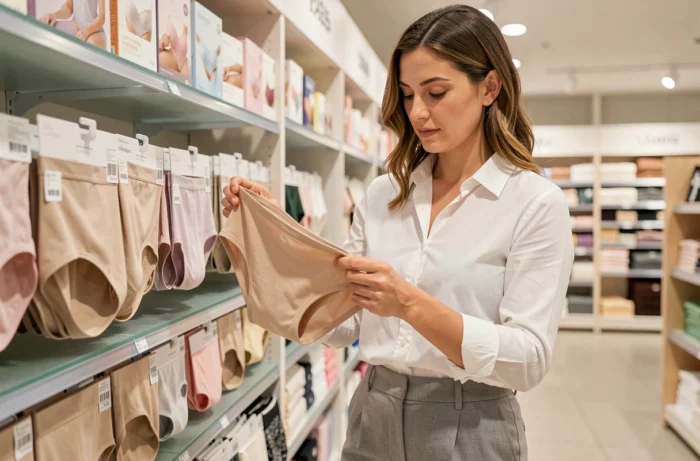
The determining factor remains the underwear itself. Underwear with thick seams, easily wrinkled material, and a gusset without reinforcement accentuates the mark instead of smoothing it out. Seamless panties made of dense microfiber with a flat gusset offer a much more discreet result under leggings or tight pants.
Commando: A Divisive Option
Some women prefer to wear no underwear under their sports leggings. The idea seems logical: without panties, there are no annoying seams. In practice, the fabric of the legging comes into direct contact with the skin and can mark more if the weight is low. This option only works with leggings that have a sufficiently thick integrated gusset and an appropriate cut.
Embracing Camel Toe: What Online Discussions Say
Camel toe is not always seen as a problem to be solved. On forums and social media, recurring discussions show that discomfort varies significantly from person to person, and that the social context weighs more heavily than the actual visibility of the mark.
In the gym, camel toe is often considered a common consequence of wearing technical leggings. In a professional meeting or formal event, the same mark becomes a source of discomfort. The issue is not the mark itself, but the mismatch between the garment and the context.
The increasing visibility of the body-positive movement has helped to demystify the subject. Voices, particularly on TikTok and Instagram, claim the right not to worry about camel toe, presenting it as a normal anatomical detail rather than a fashion faux pas. However, this stance remains minority in professional environments or family contexts, where social pressure encourages discretion.
Correcting Without Buying: Adjustments That Work with What You Have
Before renewing your wardrobe, a few simple checks can help reduce camel toe with the clothes already available.
Size is the first factor. A legging that is too small mechanically rides up in the crotch. Moving up a size is sometimes enough to completely eliminate the mark without losing the shaping effect. Conversely, pants that are too large create folds that can also form a false camel toe due to fabric accumulation.
Dark colors and busy patterns reduce the visibility of camel toe without physically eliminating it. A solid black legging with minimal seams remains the safest choice for those wanting to limit the mark without changing their habits.
Thick Fabric vs. Thin Fabric
Leggings made of very thin fabric, like opaque tights, are the most problematic. They hug every contour without offering structural resistance. In contrast, moderately compressive fabrics used in mid-range or high-end sports lines maintain a smoother surface due to their density.
A simple test can evaluate a fabric: stretch the legging flat between two hands. If the material becomes semi-transparent when stretched, the weight is insufficient to smooth out body contours.
Camel toe does not call for a one-size-fits-all response. The choice between embracing, hiding, or correcting depends on the context, the garment worn, and the level of personal comfort. Advances in pattern making offer structural solutions that make everyday fixes increasingly unnecessary.