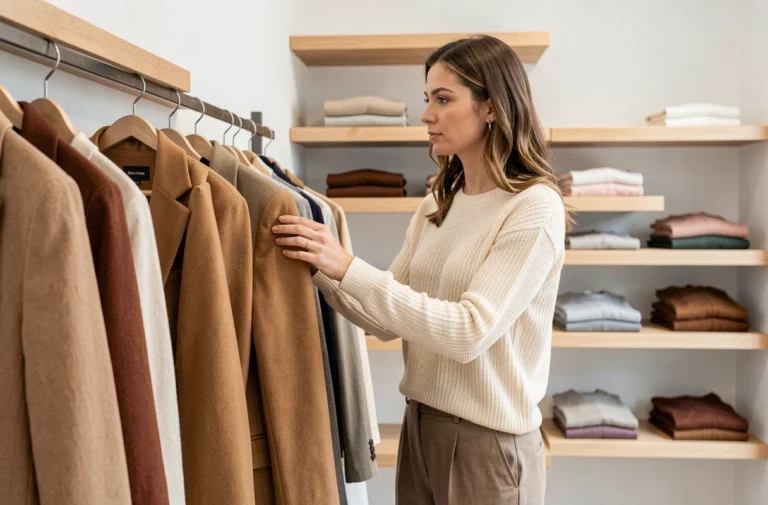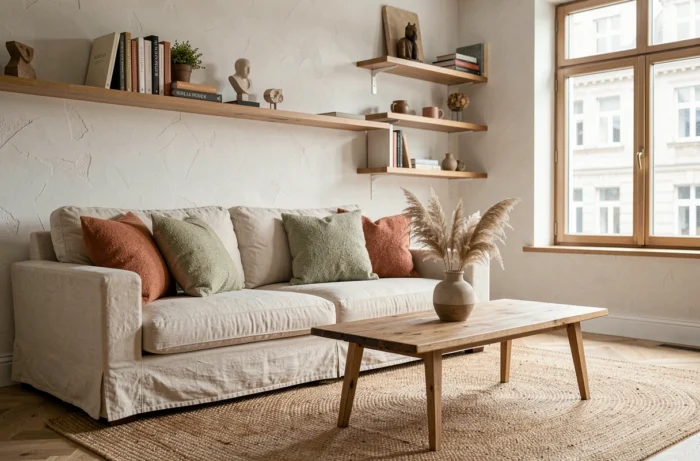
When redecorating a living room, the problem is almost never the budget. It’s the starting point. We know we want to change something, but between the perfect photos on Pinterest and the reality of an apartment with poorly placed outlets, the gap is wide. A decor blog specializing in concrete ideas and realistic inspirations can unlock a project that has been stalled for months.
Focus on strong pieces rather than multiplying furniture
For a long time, we furnished by filling every nook and cranny. A dresser here, a shelf there, a side table in the corner. The current trend goes in the opposite direction: a few expressive pieces are better than a standard accumulation.
Curved shapes, warm woods like walnut, and metallic reflections give character to a room without overwhelming it. A well-chosen sectional sofa or a sculptural armchair can structure an entire living room, where five small pieces would create a cluttered effect.
This mindset can be found on Marie Carotte’s decor blog, which offers ideas for interior decoration based on real situations rather than showroom displays. The articles cover everything from choosing a sectional sofa to sorting photos for a renovation, providing a broad spectrum of inspiration.
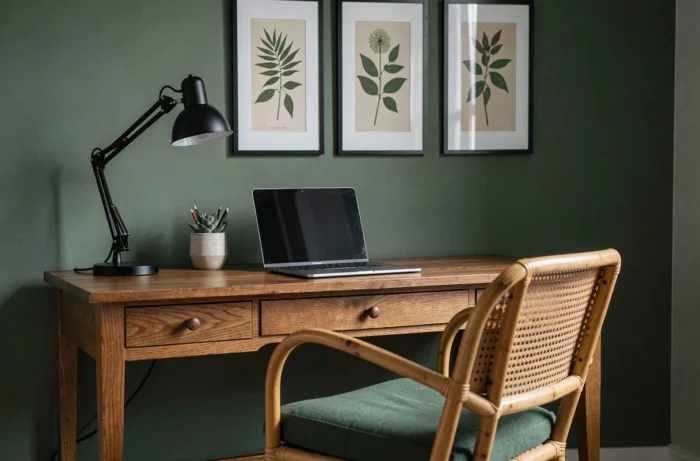
Organic and sensory decoration: what it changes in daily life
For a few seasons now, cold minimalism has been receding. We talk about organic, warm, tactile interiors. Concretely, this translates into a focus on surface textures and soft light rather than just color.
A wall with lime plaster, a boucle wool throw on a linen sofa, a dimmable lamp that shifts from office ambiance to dinner mood. These choices don’t necessarily cost more than a new piece of furniture, but they transform the perception of a room.
Natural materials and emotional comfort
Raw wood, rattan, terracotta, stoneware: these materials are making a strong comeback because they bring a sensory dimension that melamine or lacquered plastic do not offer. You touch the furniture, feel the roughness, perceive the irregularity.
This isn’t just a matter of decor trend. An interior with varied and natural materials is less tiring on the eyes and provides a more peaceful sense of space. Feedback varies on this point depending on the brightness of each home, but the principle remains the same: the variety of textures matters as much as the choice of colors.
Second-hand and vintage furniture: a decor reflex that has become structural
According to the Second-Hand Observatory published by Ifop, the majority of French people report having bought or sold a second-hand product. This reflex is now hitting furniture hard. Searching for a farmhouse table on a resale site or hunting for a 1960s buffet is no longer a marginal approach.
For interior decoration, second-hand opens up possibilities that a new catalog does not offer:
- Unique pieces that add character, without the price of contemporary designer furniture
- A personalization approach that avoids the “everyone has the same sofa” effect
- A budget freed up to invest in one or two quality new items (lighting, textiles)
Mixing vintage finds and new pieces remains the most effective method for achieving an interior that doesn’t look like a catalog page. Cohesion is maintained through the color palette and materials, not by brand.
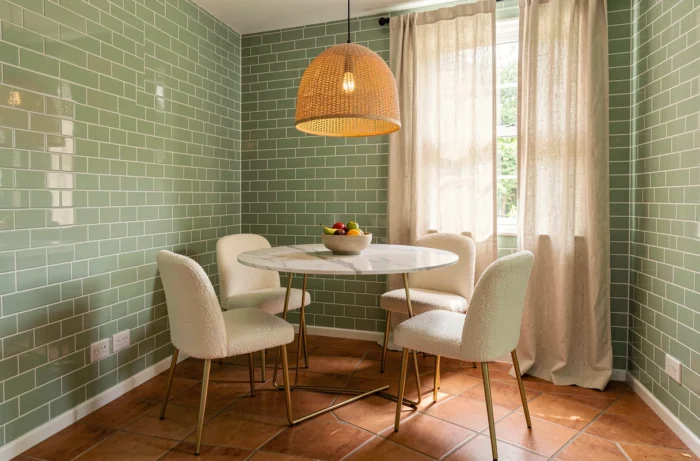
DIY decor: projects that really change a room
DIY in decoration suffers from a credibility problem. Between tutorials promising a pallet headboard “in 30 minutes” and the reality of a Saturday afternoon sanding wood, the gap is often discouraging.
The DIY projects that really work are those that target a specific and visible point:
- A fabric-upholstered headboard on a frame, achievable for a few dozen euros with basic materials
- An accent wall painted in a strong shade (terracotta, sage green, navy blue) that restructures a bedroom or office
- Asymmetrical wall shelves in raw wood, fixed on battens, to replace a bulky TV unit
Trendy colors and interior ambiance
The 2025-2026 palettes confirm the return of warm tones mixed with cool tones. Terracotta pairs with slate gray, sandy beige combines with deep blue. This play of soft contrasts works particularly well in living spaces where light changes throughout the day.
A wall painted in a strong color costs only a can of paint and a day’s work. It’s probably the best investment/visual impact ratio in interior decoration.
Finding decor inspiration without drowning in trends
Pinterest, Instagram, specialized blogs: there is no shortage of inspiration sources. The risk is collecting ideas without ever taking action, or wanting to replicate an interior designed for a 120 m² loft in a 55 m² T3.
Starting from the constraints of your home rather than an ideal image completely changes the game. A low ceiling? You play with short hanging lights and light colors at the top. A narrow hallway? A gallery of frames and a mirror at the end create depth without taking up floor space.
The most useful decor blogs are those that start from these concrete situations. An article on integrating a sectional sofa into a standard living room provides more than a gallery of architect-designed villas. It’s the difference between applicable inspiration and a dream disconnected from reality.
Ultimately, transforming your interior doesn’t require a considerable budget or an architect. A well-placed strong piece of furniture, worked textures, a bold color on a wall, and a few vintage finds are enough to give an identity to a space. The hardest part is getting started.