A south-facing plot with compact clay soil does not transform in the same way as a shaded courtyard on a concrete slab. Before planting anything, one must observe what is actually happening on the ground: where water stagnates after rain, which areas remain scorched in the height of summer, which wall reflects heat at the end of the day.
It is from these concrete constraints that one can transform a garden into a green haven, not from a Pinterest board.
Compact soil and drainage: the problem no one addresses before planting
We regularly see flower beds installed directly in unworked clay soil. The roots circle around, water stagnates in winter, and the plants die by the second summer. Loosening the soil before any landscaping radically changes the game.
On heavy soil, using a broad fork to aerate to about thirty centimeters, followed by adding mature compost and coarse sand, is enough to revive microbial life. One should avoid using a rototiller, which creates a plow pan deep down, a water trap that roots cannot cross.
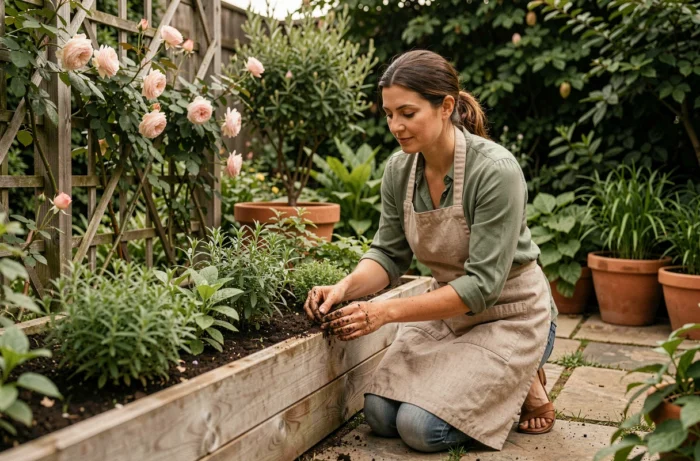
For courtyards and small spaces where soil is almost non-existent, untreated wooden raised beds remain the most reliable solution. Here, one can control the substrate, drainage, and exposure. A lush garden starts with functioning soil, not with plants bought from a garden center without considering what lies beneath.
Specialized resources like instant-jardin.fr provide ideas for landscaping suited to different terrain configurations, from small courtyards to large landscaped areas.
Ground cover plants and plant layers for a low-maintenance garden
The classic mistake is to fill every square meter with grass. Grass requires regular mowing, significant watering, and generates exactly the type of noise that causes problems with neighbors (more on that below). Instead, one can work in layers.
Covering the ground without mowing
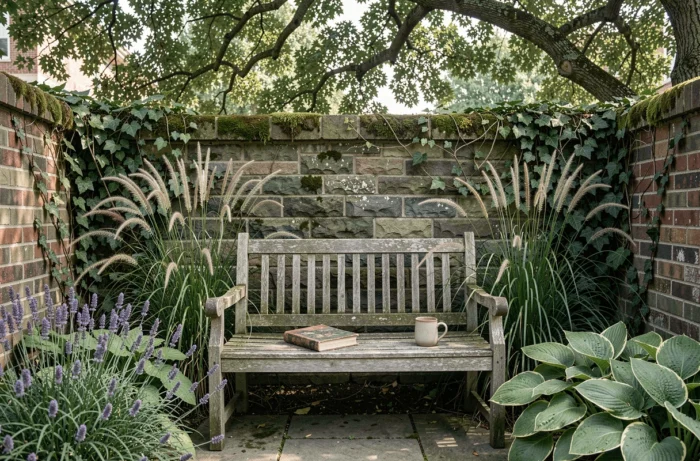
Ground cover plants like creeping thyme, periwinkle, or ground ivy quickly colonize cleared areas. They eliminate the need for mowing on secondary surfaces, retain soil moisture, and limit weeds.
They are combined with a low shrub layer (lavenders, rosemaries, dwarf dogwoods) that visually structures the space without creating an opaque wall. The final layer, trees, provides shade: a small tree with a spreading habit like a field maple or a serviceberry is sufficient for a modest-sized garden.
Choosing plants suited to your climate
Planting an ornamental banana tree in Morbihan or a birch in the Var won’t last long. Favoring local or acclimatized species reduces watering, treatments, and replacements. Feedback varies on the adaptation of certain so-called “hardy” varieties according to microclimates, but the principle remains the same: observing what already grows in neighboring gardens provides a good indicator.
- In a Mediterranean climate: cistus, gaura, grasses like stipa, olive trees. These plants tolerate summer drought without watering once established.
- In an oceanic climate: hydrangeas, ferns, hostas, Japanese maples. The ambient humidity suits them, but be cautious of salt wind near the coast.
- In a continental climate: frost-resistant perennials like echinacea, sedums, miscanthus. Generously mulching in autumn protects the roots.
Relaxation corner and landscaping: materials, terrace, and vegetable garden
A functional relaxation space is not just about placing a garden lounge on the lawn. One must think about circulation, covering, and shading together.
For the terrace, wood remains the most versatile material. Class 4 pine or Douglas planks offer a good cost/durability compromise. Composite materials require less maintenance but heat up more under direct sunlight, making them uncomfortable for bare feet in summer.
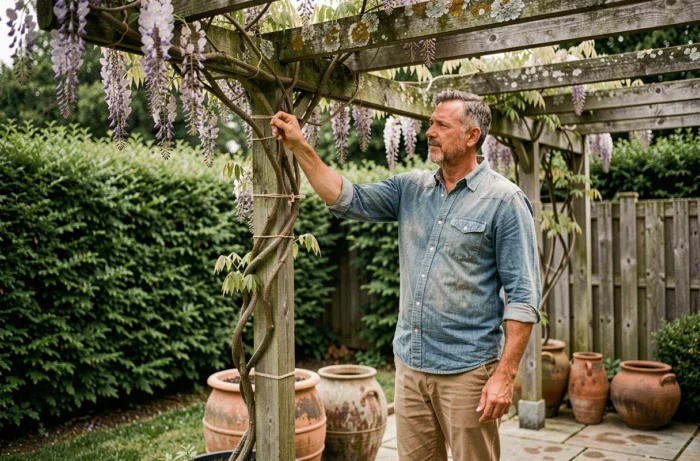
Planning a natural shaded area rather than just a pergola helps reduce the feeling of heat. A deciduous tree planted to the southwest of the terrace filters summer sunlight and allows light to pass through in winter. A green pergola (wisteria, virgin vine, star jasmine) combines structure and living shade.
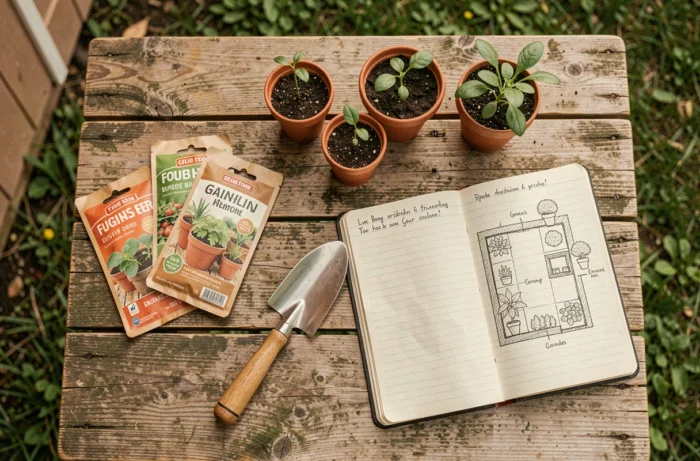
For the vegetable corner, it is beneficial to integrate it into the ornamental garden rather than relegating it to the back of the plot. Raised wooden vegetable beds, placed near the kitchen, become a full-fledged landscaping element. Here, one mixes herbs, small vegetables, and edible flowers for a result that is both productive and aesthetic.
Noise from gardening and neighbors: the legal constraint to anticipate
One rarely thinks about the sound impact when landscaping a garden. Law No. 2024-346 of April 15, 2024, has included abnormal neighborhood disturbance in the Civil Code under Article 1253. Neighbors’ complaints about gardening noise (lawnmowers, hedge trimmers, blowers) are now easier to pursue.
In practice, about 23 departments in the South and Southwest now prohibit mowing during the hottest months of summer, for combined reasons of noise nuisance and fire risk. Authorized hours vary by municipality, but the general trend is tightening.
- Replacing part of the lawn with ground cover or mineral mulching mechanically reduces mowing frequency.
- Battery-powered electric tools are significantly quieter than gas-powered ones, a criterion to consider when replacing equipment.
- Installing a mixed wild hedge instead of a wall of thuja creates a natural acoustic barrier while promoting biodiversity.
A garden that functions as a true living space relies on technical choices made from the outset: prepared soil, plants consistent with the climate, materials suited to the actual use of each area. The regulatory framework regarding noise pushes in the same direction, towards less mechanized and more planted gardens. Ultimately, this is the best way to achieve that famous green haven, by working with the land rather than against it.