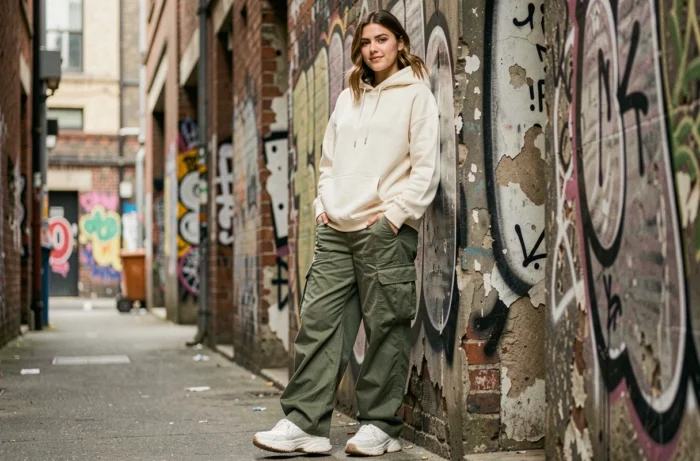
Everyday streetwear in 2024 is no longer just about stacking oversized pieces and sneakers. Urban dress codes have become more complex, and the line between streetwear and professional wardrobe has blurred significantly. Embracing streetwear style today requires mastering a few precise mechanics of silhouette construction.
Digital Product Passport: What Changes for Choosing Streetwear Pieces in Europe
The Regulation (EU) 2024/1781 on the eco-design of sustainable products (ESPR), which came into effect in July 2024, places textiles and footwear among the priority categories. For streetwear sold in the European Union, this means the gradual introduction of the Digital Product Passport (DPP), a system that makes technical data about each garment accessible, often via QR code.
Fiber composition, share of recycled material, estimated durability, reparability, carbon footprint, and end-of-life data: this information becomes available for consultation before purchase. We observe that this regulatory framework is concretely changing the way to select a hoodie, cargo pants, or a pair of sneakers.
An informed streetwear consumer can now compare two visually similar pieces based on longevity and actual composition criteria. Brands that already publish this data on urban-fashion.fr are gaining a competitive edge in traceability, a criterion that increasingly influences purchasing decisions.
- The share of recycled material helps distinguish a durable technical jogger from a product with rapid obsolescence, even at equivalent prices.
- The reparability index helps assess whether a sneaker can be re-soled or if it will end up as textile waste after a few months.
- End-of-life data directs consumers towards pieces designed for recycling, a point that most streetwear guides do not address.
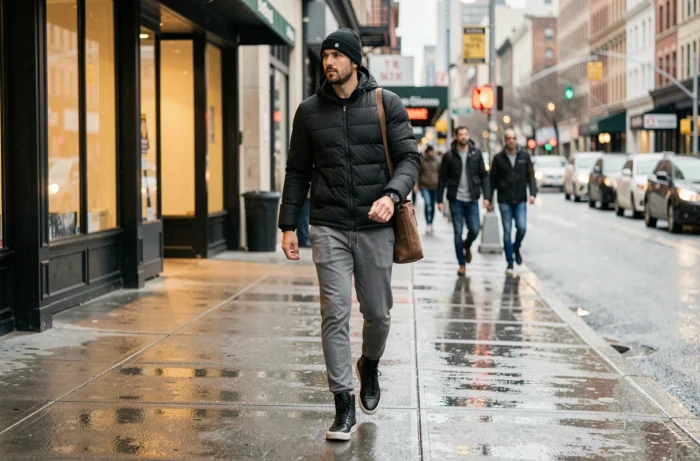
Alternatives to Classic Pants: Building a Streetwear Look Compatible with the Office
Recent consumption data confirms a real decline in the wearing of classic pants in everyday streetwear since 2024. Technical joggers, cargo skirts, and hybrid shorts are gaining ground, even in semi-professional contexts.
The challenge is to integrate these alternatives without tipping into a purely sporty look. We recommend working on the contrast between the bottom (casual, functional) and the top (structured, understated).
Technical Joggers with Structured Pieces
A jogger made from technical fabric with discreet finishes (no flashy side stripes) pairs well with a flannel overshirt or an unstructured blazer. The technical fabric replaces fleece cotton to maintain comfort without the raw sportswear look. The fit of the jogger should be slightly tapered: too loose, and it resembles loungewear.
Cargo Skirts and Layered Shorts
The cargo skirt, worn with low sneakers and a tucked-in t-shirt, creates a readable streetwear silhouette without resorting to oversized cuts. The patch pockets add the utilitarian vocabulary characteristic of the genre. In cold weather, layering shorts over opaque tights works if the shorts remain understated (no graphic patterns).
Streetwear Sneakers: Beyond Limited Collaborations
Drops and collaborations between brands and artists continue to shape the sneaker market. Chunky models remain popular, but the underlying trend is shifting towards slimmer silhouettes and eco-friendly sneakers made from recycled materials.
Rather than chasing every limited edition, we observe that a functional streetwear wardrobe relies on two complementary pairs.
- A pair of low sneakers in neutral colors (off-white, gray, black), which adapts to most outfits. It serves as a daily staple.
- A more expressive pair (chunky, bright colors, or collaborations) reserved for outfits built around it. It becomes the focal piece of the look.
- A high-top hybrid boot model for the cold months, replacing the classic ankle boot while maintaining the sneaker code.

Streetwear Accessories and Textile Layering: The Details that Structure the Outfit
Accessories are not a cosmetic addition in streetwear. They serve to balance the proportions of a silhouette that is often voluminous. A cap or bucket hat visually reduces the “bulk” effect of an oversized top. A crossbody fanny pack creates a tension point at the torso that breaks the verticality.
Layering remains the most underestimated technical mechanism. The goal is not to stack for the sake of stacking, but to create levels of interpretation within the outfit. A graphic t-shirt under an open overshirt, itself under an unzipped bomber, generates three distinct visual planes.
Logos and Graphic Patterns: Surface Dosage
Retro logos and graphic prints inherited from the 90s (Nike, Champion, Stüssy, Supreme) remain present. The basic rule to avoid overload: one strong graphic element per outfit. If the t-shirt features an XXL logo, the rest of the silhouette remains solid. If the pants are printed, the top should be understated.
This principle of surface dosage allows for maintaining the assertive character of streetwear without falling into accumulation that muddles the readability of the look.
Streetwear in 2024 rewards those who master silhouette construction rather than the accumulation of trendy pieces. The European regulatory framework also encourages selecting urban clothing based on verifiable sustainability criteria, which is fundamentally changing the purchasing logic in this segment.