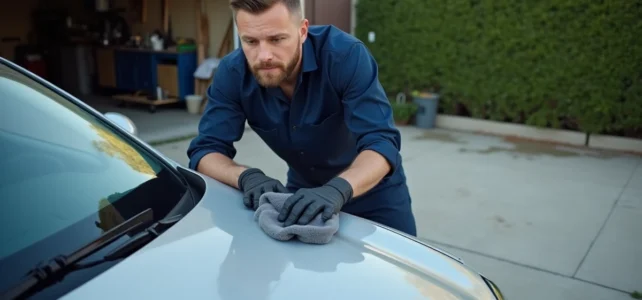
Cars sold in recent years are equipped with sensors, cameras, and electronic assistants that profoundly change what it means to “maintain your vehicle.” Checking fluid levels and washing remain basic tasks, but they are no longer sufficient to cover all the needs of a modern vehicle. With new European regulatory requirements, the rise of wrapping as an alternative to paint, and the proliferation of specialized aesthetic centers, the scope of daily automotive maintenance has expanded.
Embedded sensors and cameras: maintenance that few drivers anticipate
Starting July 7, 2026, three driving aids will become mandatory on all new cars in Europe: a driver attention monitoring system via camera, the emergency stop signal (ESS) that flashes the brake lights during a sudden stop over 50 km/h, and the detection of cyclists and pedestrians coupled with autonomous emergency braking.
These systems rely on optical sensors placed behind the windshield, in the mirrors, or on the bumper. A dirty windshield, a poorly positioned tinted film, or a decorative sticker placed in the camera’s field can disrupt their operation. Daily car maintenance now includes regular cleaning of the sensor reading areas, a task absent from traditional guides.
After a windshield replacement, the calibration of the cameras must be performed by a qualified professional. Some auto centers include this service in the replacement cost, while others charge extra. Checking this detail before choosing a provider helps avoid an unpleasant surprise on the budget.
For everything you need to know about team-auto-passion.com, monitoring these systems is an integral part of good practices for a driver attentive to their vehicle’s safety.
Paint protection film and wrapping: material choices and practical limits
Automotive customization no longer relies solely on a paint booth. Wrapping (adhesive film applied to the body) allows changing the color or finish of a vehicle without touching the original paint. The paint protection film (PPF), transparent, protects against micro-scratches and gravel chips.
Both techniques share a common point: they require appropriate maintenance to last.
- PPF requires hand washing or low-pressure washing. Automatic car wash rollers can lift the edges of the film, especially after a few years of application.
- Matte or satin wrapping does not tolerate standard waxes or abrasive polishes, which alter its texture. Specific products exist, but they are rarely available in automotive superstores.
- Any film applied to an area equipped with sensors (front bumper, mirrors) must meet the required transparency to avoid interfering with driving assistance systems.
The durability of a PPF varies according to the quality of the film and exposure conditions. Available data do not provide a universal lifespan, but regular maintenance with suitable products significantly extends protection.
Automotive maintenance budget: areas that drivers underestimate
Classic items (oil changes, tires, technical inspections) are well identified. However, several expenses related to recent vehicles go under the radar.
Replacing a windshield equipped with a camera costs significantly more than a standard windshield due to the mandatory calibration. Brake pads on a hybrid vehicle wear differently than those on a thermal model, as regenerative braking reduces mechanical stress. The aesthetic budget (professional washing, ceramic treatment, PPF protection) represents a growing item for owners concerned about resale value.
Specialized aesthetic centers or station washing
The automotive aesthetic market has structured itself in recent years with the emergence of dedicated centers offering detailing services. A complete detailing includes decontamination, paint correction, and the application of a protection (ceramic or synthetic wax).
Prices vary significantly depending on the level of service and the size of the vehicle. However, automatic station washing remains suitable for quick routine maintenance, provided that brush programs are avoided on a vehicle covered with film or matte paint.
Connected car and maintenance tracking: what manufacturer apps change
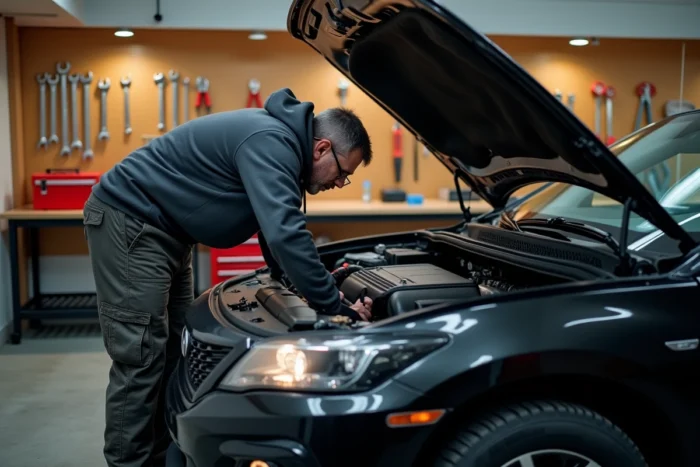
Most manufacturers now offer mobile applications linked to the vehicle. These tools allow remote checking of fluid levels, tire pressure, or maintenance alerts. Some models send a notification when a service is approaching, based on actual mileage rather than a fixed schedule.
This connected tracking presents a concrete advantage: it allows anticipating a workshop visit before wear becomes a breakdown. Some alerts trigger too early, others ignore secondary parameters, but the principle of a digital maintenance log accessible at all times changes the driver’s relationship with their vehicle.
A well-maintained vehicle consumes less fuel. Poor maintenance (clogged filters, under-inflated tires, neglected mechanics) can lead to a significant increase in fuel consumption. This observation is enough to justify regular checks of filters, tires, and basic mechanics.
Automotive maintenance in 2025 combines traditional mechanical tasks with attention to electronic equipment. Cleaning a camera sensor takes ten seconds, but forgetting it can disable autonomous emergency braking.