The AGGIR grid classifies seniors into six levels of dependency, but it says nothing about the actual quality of life on a daily basis. Improving the well-being and autonomy of seniors relies less on a logic of overall compensation than on targeted interventions, tailored according to the functional profile of each individual.
Dedicated APA hours for social connection: an underutilized lever for senior autonomy
Since January 1, 2024, decree n° 2023-1431 has introduced a measure that many caregivers and professionals are still unaware of. Recipients of the home APA now have up to 9 monthly hours dedicated to social connection, separate from hours for household or personal care assistance.
These hours fund specific activities: accompanied walks, cultural outings, cognitive games, wellness workshops. The goal is not just to occupy time. It is about breaking isolation while allowing the caregiver to identify emerging vulnerabilities (balance disorders, disorientation, depressive signs).
We observe that these hours remain largely underutilized. APA aid plans rarely include this line explicitly, and home care services do not systematically offer it. However, for a senior classified as GIR 4, these 9 hours represent a significant addition to usual support. The catalog of solutions offered on ideosenior.fr helps identify services that effectively incorporate this social dimension into their offerings.
MaPrimeAdapt’ and housing adaptation: technical criteria that change daily life
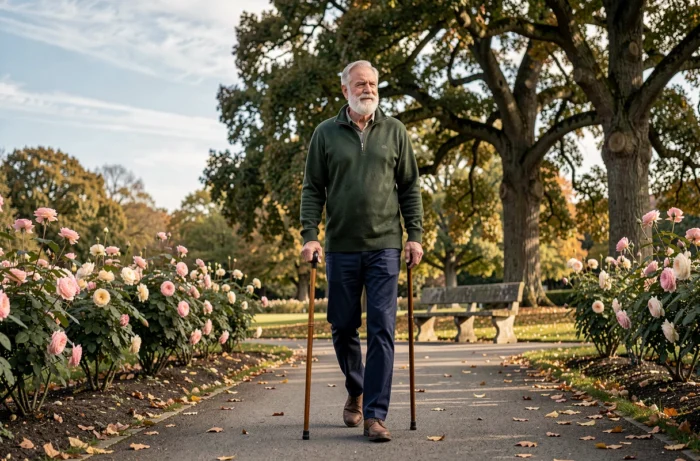
Adapting the home is the most significant factor in maintaining autonomy. MaPrimeAdapt’, launched in January 2024, finances adaptation work with coverage rates of up to 70% of the total cost for very low-income households. In 2024, 23,561 homes were adapted thanks to this program.
Eligible work goes beyond just installing grab bars in the bathroom. The scope includes walk-in showers, stairlifts, access ramps, appropriate lighting, and motorized shutters. We recommend prioritizing interventions based on three functional criteria:
- The primary fall zone: bathroom and nighttime access to toilets. A walk-in shower with a fold-down seat and non-slip floor measurably reduces risk, much more than a simple mat
- Interior thresholds and changes in level: a rise of just a few centimeters can cause a fall in someone whose proprioception is declining. Leveling floors and removing door thresholds are priority tasks
- Automated lighting with motion detection in hallways and staircases, which compensates for decreased visual acuity without requiring the search for a switch in a precarious balance situation
The preliminary assessment, conducted by an occupational therapist as part of MaPrimeAdapt’, is the determining step. A well-conducted ergonomic assessment identifies invisible risks (inappropriate countertop height, door handles that rotate rather than lever-type) that the occupant may no longer perceive.
Early cognitive disorders: adapting daily actions before the loss of autonomy
Popular articles treat cognitive disorders as an advanced stage. In practice, the first signs appear in instrumental activities: medication management, phone use, meal preparation, budget management. The person remains autonomous for basic acts (personal care, dressing) but struggles with tasks that require planning and sequencing.
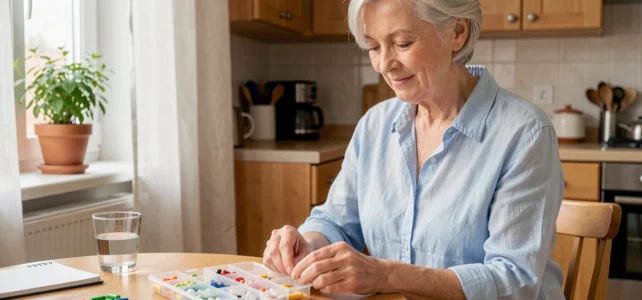
At this stage, the most effective response is not additional human assistance but simplifying the environment. An electronic pill organizer with an alarm replaces the mental management of medication. A large-button phone with photo shortcuts to frequent contacts maintains social connection without cognitive effort. Visual labels on kitchen cabinets (photo of the contents) compensate for working memory issues.

We recommend intervening as soon as family members notice repeated forgetfulness in instrumental activities, without waiting for a formal assessment. Every month gained in instrumental autonomy delays the transition to a heavier GIR.
Nutrition and physical health of seniors: beyond generic advice
Malnutrition affects a significant portion of seniors living at home, and its consequences on autonomy are direct: muscle loss, fatigue, repeated falls. The issue is not dietary ignorance but loss of appetite linked to often mechanical factors.
An ill-fitting dental appliance, dry mouth caused by certain treatments, or early dysphagia radically alters the relationship with food. Before prescribing nutritional supplements, a dental assessment and swallowing evaluation help identify the real cause.
In terms of physical activity, adapted exercise programs (strengthening lower limbs, balance work on unstable surfaces) yield concrete results in fall prevention. Adapted physical activity impacts sarcopenia and postural balance, two major determinants of functional autonomy. Collective prevention workshops offered by pension funds or CCAS generally include these exercises.
Maintaining independence at home is not just about accumulating services. It relies on a sequence of technical micro-decisions (housing adaptation, adjustment of aids, early detection of vulnerabilities) that, when made at the right time, preserve several years of autonomy. The difference rarely lies in major directions but in the precision of the diagnosis and the speed of execution.