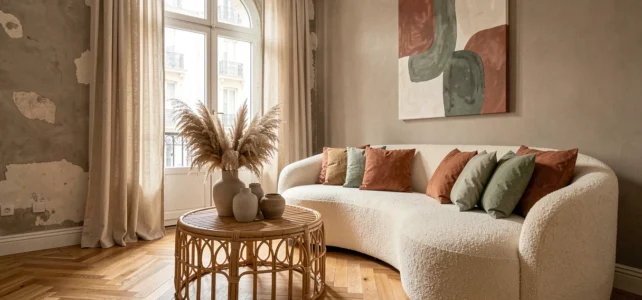
When redesigning a living room or rethinking a bedroom, the real work begins with sorting. The decor trends of this season are reflected as much in color palettes as in the constraints of the furniture market, which is in sharp decline in France. Understanding what is happening behind the scenes helps make stronger choices for one’s interior.
Sustainable materials in decor: from marketing discourse to specifications
We have been hearing about natural and eco-friendly materials for several seasons. The novelty is that sustainability is no longer an optional selling point. At the Maison et Objet 2026 fair, the demand for sustainable materials was placed on the same level as budget optimization in customer expectations.
On the industry side, CODIFAB has included in its 2024-2027 roadmap collective CSR tools, traceability, and circular economy practices for furniture manufacturers and publishers. We are no longer in the realm of aesthetic trends: we are talking about structured specifications and manufacturing standards.
For those following all the news on Vivez Décorez, this shift is concretely reflected in a growing offer of furniture and objects whose origin and composition are documented. In stores or online, checking the material sheet has become a useful reflex before any decor purchase.
Soothing colors and raw textures: the decor palette of the season
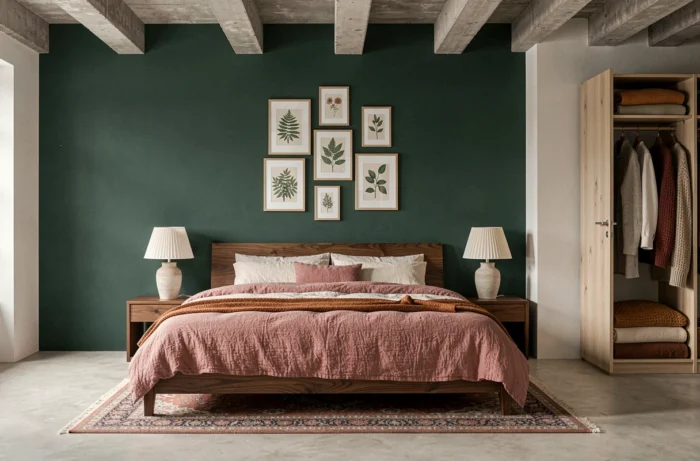
Vibrant colors have not disappeared, but their role has changed. They are now used in touches (a cushion, a vase, a frame) rather than as a flat color on an entire wall. The dominant theme of the season leans towards soft shades and raw textures, a movement visible in both Paris and New York according to several recent industry analyses.
How to balance colors without overwhelming the room
The principle that works on the ground: start with a neutral base (light walls, wooden or linen furniture), then inject color through accessories. Three colored elements in the same color range are enough to give character to a living room without creating visual fatigue.
- A strong textile (curtain, throw, or rug) that sets the main tone of the room
- One or two decorative objects (ceramics, candlesticks, frame) in a similar shade
- A plant or natural fiber element that transitions with the rest of the furniture
Limiting the palette to two or three colors generally yields a more coherent result than a patchwork of stacked trends.
Heritage style and craftsmanship: the decor trend that structures the market
The Maison et Objet 2026 fair highlighted a fact that purely inspirational articles rarely mention: craftsmanship is becoming a strategic criterion at the international level, not just a style among others. Heritage style, which blends classic elegance with the authenticity of craftsmanship, is establishing itself as an underlying trend.
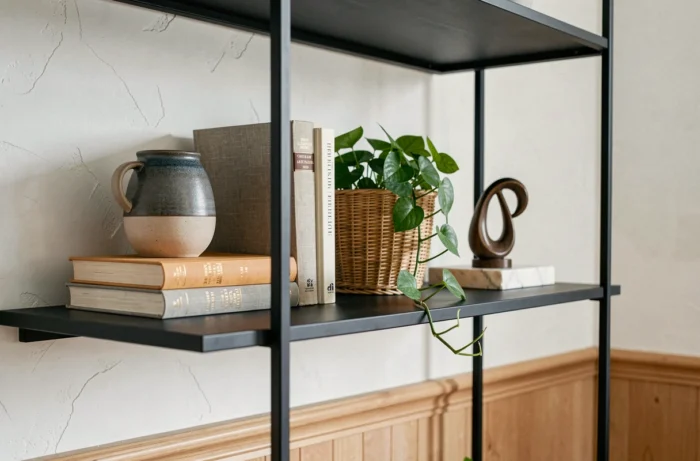
Specifically, we see pieces with visibly handmade finishes (pottery, worked metal lighting, woven textiles) appearing in this season’s collections. This is not a return to raw rusticity: it is contemporary furniture that embraces its manufacturing traces.
Why the declining furniture market pushes towards quality
The French furniture market is experiencing a marked decline in 2026. This contraction has a direct effect on trends: when sales volume decreases, publishers focus more on pieces with higher perceived value. We buy less, but we buy better.
For a decoration project this season, this means it is easier to find well-made furniture at mid-range prices. Brands looking to differentiate themselves are investing in the quality of materials and durability rather than in the rapid turnover of collections.
Reuse of furniture and circular economy in decoration
The reuse of furniture is no longer a marginal approach, it is a structured market segment. There are now specialized platforms, restoration workshops, and even brands that incorporate a second-hand offer alongside new items.
The CODIFAB roadmap confirms this direction with a circular economy component. On the ground, this translates into vintage or refurbished pieces that integrate perfectly into contemporary interiors. A reupholstered 70s armchair with raw linen fabric checks both the heritage and sustainability boxes.
- Check the structural condition of the furniture (joints, legs) before falling for the aesthetics
- Prefer pieces whose covering can be changed without altering the shape
- Mix one or two vintage pieces with new furniture to avoid a complete flea market effect
Modularity and small spaces: adapting decor to housing reality
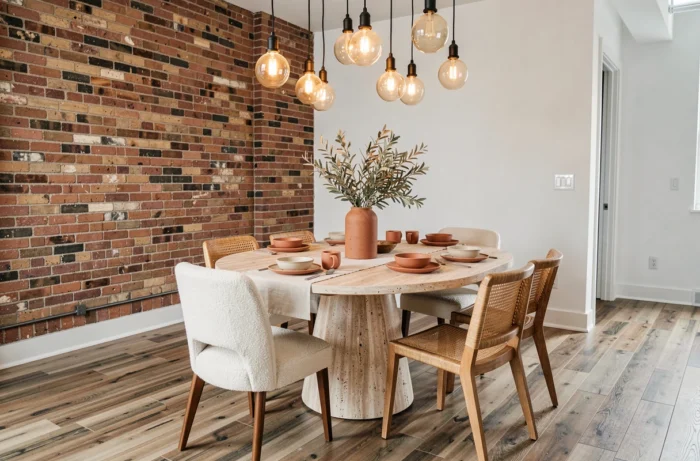
The decor trends of the season also take into account a very concrete constraint: the available space. Modular furniture (reconfigurable sofas, extendable tables, stackable storage) meets a real need in urban apartments.
A piece of furniture that changes configuration according to use is better than two fixed pieces. This is an increasingly important criterion in purchasing decisions, especially for studios and one-bedroom apartments where every square meter counts.
The trend towards warm minimalism, opposed to the cold minimalism of previous years, accompanies this movement. We keep few pieces of furniture, but each has a presence (material, color, shape) that is enough to dress the room.
The common thread of this decor season can be summed up in a simple observation: aesthetic choices and economic realities are converging. Better choices, keeping items longer, mixing old and new – this is not just a stance, it is the direction that both manufacturers and buyers are taking.