The French fashion industry is going through a paradoxical phase. Textile consumption is declining, purchase frequency is dropping, and second-hand platforms are capturing an increasing share of the market. In this context, what signals should we pay attention to in order to identify the trends that will truly shape wardrobes in 2026?
Decline in textile purchases in France: what the numbers reveal about fashion trends for 2026
Before discussing cuts or colors, a look at consumption data is necessary. Buying behaviors directly influence what ends up in stores and what disappears from the shelves.
| Indicator | 2019 | 2026 | Change |
|---|---|---|---|
| Annual purchase frequency (clothing) | 23.5 purchases | 19.4 purchases | Marked decline |
| Clothing (volume) | Reference | Approximately -1.3 % | Continuous decline |
| Shoes (volume) | Reference | Approximately -2.3 % | Accelerated decline |
| Share of buyers reducing their fashion spending | – | 53 % | Majority in restriction |
This data, sourced from the Worldpanel by Numerator and the Timeskipper analysis on retail 2026, outlines a market where consumers are buying less often and making more careful choices. Overall consumption in France is slightly rising (about +2.6 % in volume), but the textile sector is not following this trend.
This gap between stabilizing purchasing power and a textile sector that continues to decline signals a shift in priorities. Buyers are focusing their budgets on pieces perceived as more durable or versatile, which alters the very nature of the trends that are emerging. Spotting these trends as new publications arise is easier by checking the fashion section of Flash Wave, which aggregates stylistic movements as they develop.
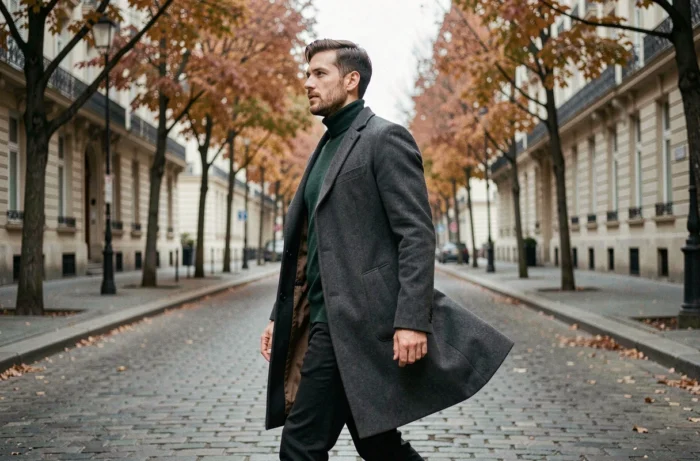
Autumn-winter 2026 fashion trends: the silhouettes emerging in stores
The quantitative decline in purchases does not prevent the emergence of clear stylistic directions. The autumn-winter 2026 collections arriving in stores show several converging axes.
Loose volumes and structured layering
Oversized cuts are not new, but their treatment is evolving. Designers are now working with controlled volumes using belts, cutouts, or stiffer materials. The layering of textures (thick knit over fluid fabric, soft leather over dense cotton) replaces the simple accumulation of layers.
This approach directly responds to the need for versatility: a well-cut voluminous piece works alone or in combination, justifying a higher price for a buyer who is reducing their purchase frequency.
Dull palettes and material contrasts
Classic autumn shades (burgundy, khaki, camel) remain present, but it is the contrast between matte and shiny surfaces that defines the season. A boucle wool coat paired with satin trousers, a ribbed sweater worn with a soft vinyl skirt: the play of textures replaces the play of colors as the main lever of originality.
Second-hand and circular fashion: a market that influences new trends
The rise of second-hand is no longer a marginal phenomenon. It is changing new trends in two distinct ways.
- Vintage pieces from the 1990s and 2000s that circulate massively on resale platforms directly inspire new collections. Cargo cuts, faded denim jackets, and oversized knits are returning to stores because they are already popular in second-hand.
- Brands are integrating resale into their model. Initiatives involving dozens of companies (Vinted, H&M, Primark, and others) advocate for a tax framework suitable for second-hand, which accelerates its normalization.
- The consumer who regularly buys second-hand develops a more discerning eye for the quality of finishes and the durability of materials, pushing new brands to rethink their standards.
Second-hand does not only compete with new items on price; it redefines desirability criteria. A piece that ages poorly loses all resale value, and buyers incorporate this factor into their choices.
E-commerce fashion in Europe: a mature market reshuffling the cards
Online fashion retail in Western Europe has reached a stage of maturity. Growth is slowing, but volumes remain substantial. This plateau changes the way trends spread.
Chinese platforms (Shein, Temu) are capturing a visible share of the entry-level market, which compresses the margins of traditional players. In response, European brands are repositioning their offerings towards mid-range lines with a focus on quality and material traceability.
Fast fashion remains dominant in volume but is losing perceived attractiveness. Measures voted by French lawmakers to limit fast fashion consumption reinforce this underlying trend. The regulatory framework is evolving in a way that favors brands capable of proving their commitment to sustainability.
What this means for the consumer
Choice is polarizing. On one side, very low-priced items renewed every week. On the other, clothes sold at higher prices but designed to last several seasons. The middle ground (average price, average quality, monthly renewal) is the one that suffers the most.
Fashion trends for 2026 are no longer only read on runways or in lookbooks. They are formed at the intersection of market data, regulatory constraints, and deeply transforming consumption practices. Buying less but better is no longer a slogan; it is a measurable behavior: purchase frequency has dropped from 23.5 to 19.4 purchases per year in seven years, and this trajectory shows no signs of reversal.