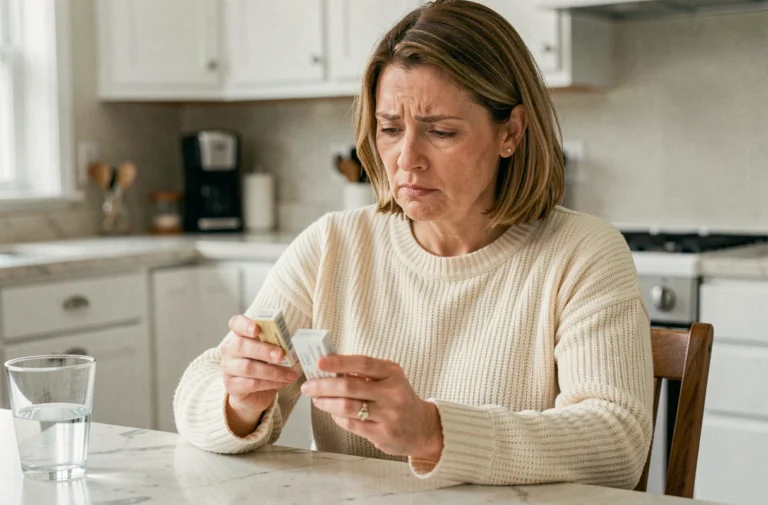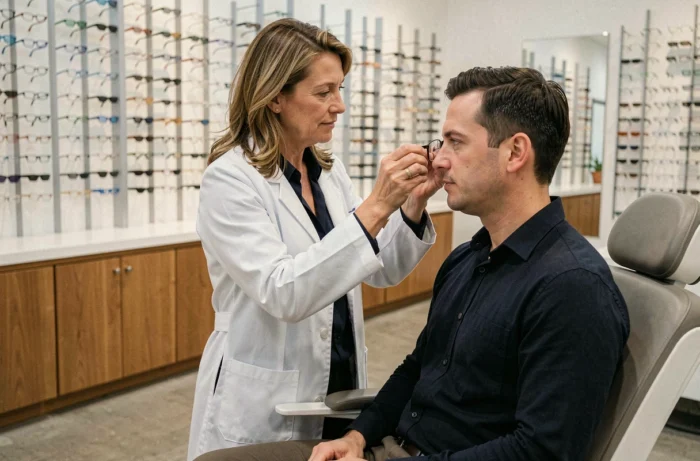
The neighborhood optician holds a special place in the visual care journey in France. A healthcare professional trained in medical optics, they do much more than sell frames. The dense territorial network of optical shops often makes them the first accessible contact, sometimes even in areas where ophthalmologists are scarce. Understanding what the services offered in-store really entail allows customers to make the most of each visit.
In-store optical tele-expertise: a recent service under pressure
Among the most notable developments in recent months, optical tele-expertise is significantly transforming the in-store experience. This system allows an optician to obtain, remotely, the opinion of an ophthalmologist to adapt or renew a prescription, without the client having to wait for a medical appointment that is often lengthy to secure.
The rollout of this service is accelerating. By the summer of 2026, the Lyleoo platform announced around 2,000 partner opticians, compared to about a thousand in May 2025. This growth changes what can be expected from a visit to a local optician: in an increasing number of shops, it becomes possible to obtain an updated prescription on-site.
The picture is not one-dimensional. In September 2026, the National Union of Ophthalmologists of France (SNOF) raised concerns about deviations, pointing to an unusually high proportion of contact lens prescriptions via tele-expertise compared to in-office consultations. Ophthalmologists are calling for strengthened regulations and complete traceability of prescriptions.
A legal gray area persists regarding the exact framework of this practice, which fuels a debate about the safety of care rather than a simple matter of convenience.
For the client, this means it is useful to ask their optician directly: does the shop offer tele-expertise, and under what conditions is the prescription validated by an identifiable doctor? Transparency on this point is part of the service.
Eye exam at the optician: scope and limits of in-store checks
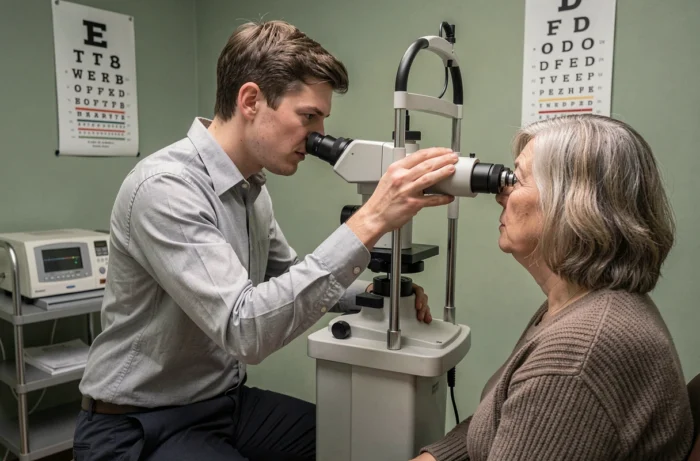
The eye exam conducted in an optical shop is a common service, but its scope deserves clarification. The optician is qualified to measure refraction (myopia, hyperopia, astigmatism, presbyopia) and to adjust corrections based on the current prescription. This visual check allows for monitoring changes in vision between two ophthalmological consultations. To discover the offerings of Optisanté, simply inquire about the services provided directly in-store.
However, the in-store exam does not replace a comprehensive ophthalmological assessment. Screening for conditions such as glaucoma or AMD is the responsibility of the doctor, not the optician. Field reports vary on this point: some clients consider the in-store check sufficient, while it does not cover eye health in the broader sense.
What can reasonably be expected from an in-store exam:
- A measurement of visual acuity and refraction, useful for adjusting the correction between two prescriptions
- A check of the fit of the glasses or contact lenses worn, with adjustments if necessary
- A referral to an ophthalmologist if the optician detects an unusual sign during the check
Workshop work and lens adaptation: the technical know-how of the optician
An often underestimated aspect of the profession concerns the work done in the back shop. It is the optician who cuts, mounts, and adjusts the lenses on the chosen frame. This technical gesture directly affects visual comfort: poorly centered or misaligned lenses can cause headaches or eye strain, even with the correct prescription.
Adjusting the frame itself (temples, nose pads, tilt) is part of the regular follow-up. A neighborhood optician who knows their clientele can make these adjustments without an appointment, sometimes months after the purchase. It is an invisible yet crucial service for daily experience.
Contact lens fitting in-store
The fitting of contact lenses is a specific service that not all shops offer with the same level of expertise. The optician checks the compatibility of the lens with the curvature of the eye and the conditions of use (screen work, sports, extended wear). An initial trial in-store, with a period of observation, allows for identifying any potential intolerances before the final purchase.
Post-purchase follow-up and low-vision products: what distinguishes a local optician
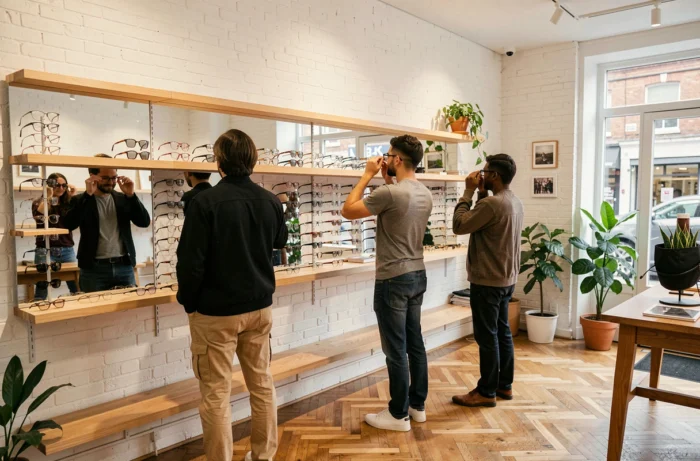
Post-sale follow-up is one of the most concrete criteria for assessing the quality of service of an optician. An accessible neighborhood shop facilitates repeated adjustments, minor repairs, and cleanings that extend the lifespan of optical equipment.
In the low-vision segment, some opticians offer specialized products (illuminated magnifiers, magnifying systems, specific filters) aimed at individuals for whom standard correction is no longer sufficient. This type of service remains unevenly distributed across the territory, and it is best to inquire directly with the shop before visiting.
Some points to check when choosing a local optician suited to your needs:
- The availability of an eye exam on-site and the conditions for coverage (with or without appointment)
- The presence or absence of a tele-expertise service, and the name of the platform used
- The ability to fit contact lenses, beyond just selling boxes
- The post-purchase follow-up policy: free adjustments, warranty period, common repairs
The role of the neighborhood optician goes far beyond the commercial transaction. Between the rise of tele-expertise, in-store visual checks, and workshop work, the accessible services vary from one shop to another. Asking the right questions before committing remains the best way to obtain support that is truly suited to one’s visual situation.